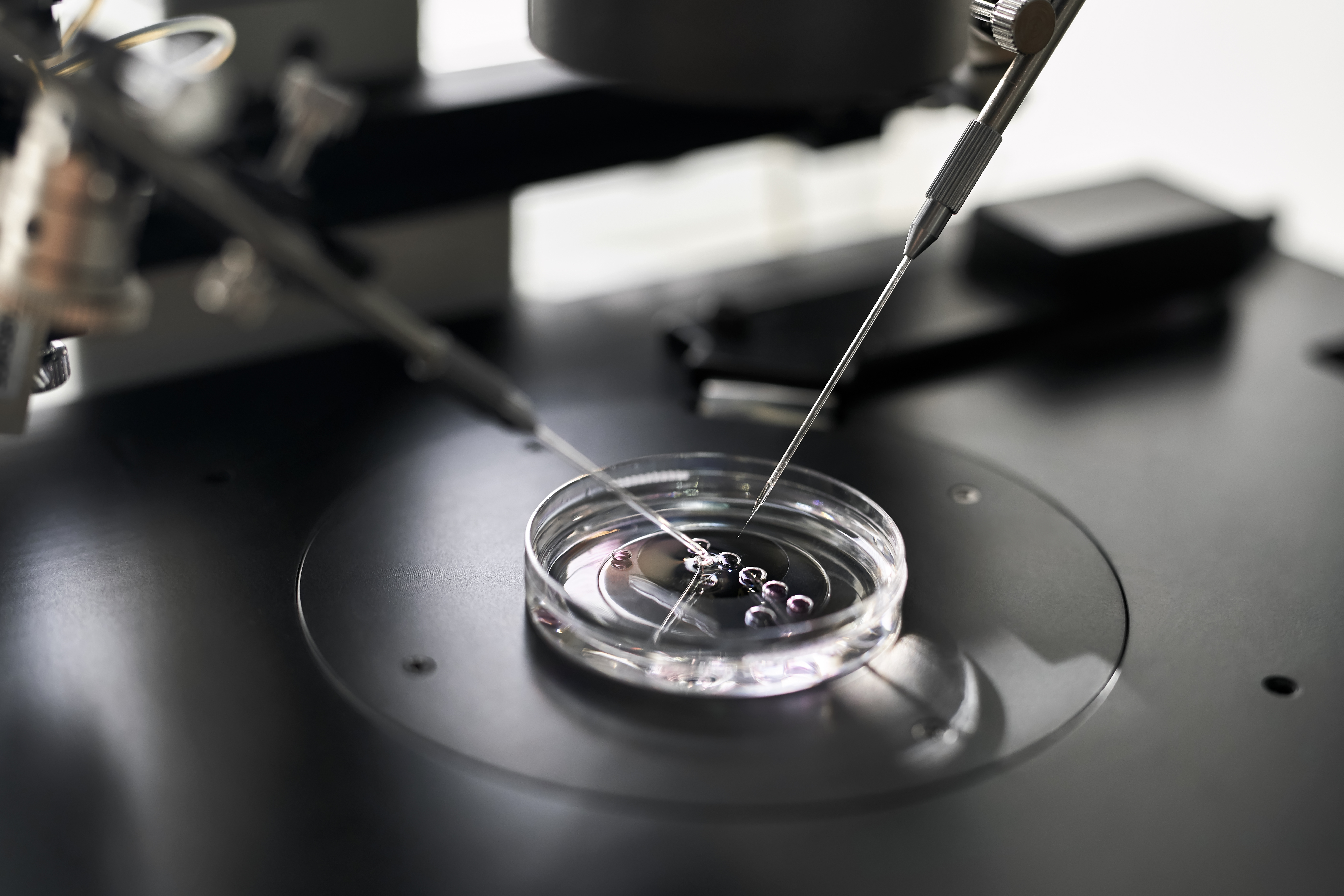
A newly developed microfluidic chip may help fertility doctors recover viable eggs that would otherwise be missed during in vitro fertilization treatments, according to a study published in Nature Medicine.
Infertility affects an estimated 8% to 12% of couples of reproductive age worldwide. In vitro fertilization, or IVF, is often used when couples struggle to conceive. During IVF, doctors retrieve eggs from a woman’s ovaries, fertilize them in a lab, and then implant an embryo into the uterus.
Because success rates often depend on the number of healthy eggs collected, doctors typically try to retrieve as many eggs, also called oocytes, as possible. However, current methods rely heavily on manual screening of follicular fluid under a microscope. That fluid surrounds the eggs inside the ovary. Experts say the process is not perfect and some viable eggs can be overlooked.
Researchers have now designed a device aimed at solving that problem.
The technology, called the FIND-Chip, is a microfluidic device. Microfluidics involves guiding tiny amounts of liquid through small channels. In this case, follicular fluid is passed through a chip containing a network of narrow pathways and microscopic pillars. The structure acts like a sieve. Eggs are trapped while smaller debris and fluid flow through.
The system then uses pulsing cycles of cleaning fluid to remove surrounding outer cells from the eggs. The cleaned eggs are moved into a holding chamber inside the chip, where they can be collected and prepared for fertilization.
To test the device, researchers processed discarded follicular fluid from 582 patients at four fertility clinics. The samples had already been examined by specialists and marked for disposal.
Even so, the FIND-Chip recovered 583 additional eggs from 316 patients. Many of those eggs were healthy.
In a small trial, use of the chip increased the number of eggs available for treatment by about 10%. In another part of the study involving 19 participants, one live birth resulted from an egg retrieved by the chip from a sample that had originally been discarded.
“The FIND-Chip’s consistent ability to recover previously undetected oocytes, which can develop into usable and viable embryos, meaningfully impacts the total reproductive potential of an IVF cycle,” the researchers wrote.
The study was conducted by the company that developed the technology, AutoIVF. The system has since been rebranded as OvaReady.
The company said it plans to conduct real-time clinical trials during active IVF treatments to measure whether the chip increases live birth rates. It is also working with the Food and Drug Administration to seek regulatory clearance for use in fertility clinics across the United States.
If approved, the device could provide new options for couples seeking fertility treatment and potentially improve the chances of a successful pregnancy.