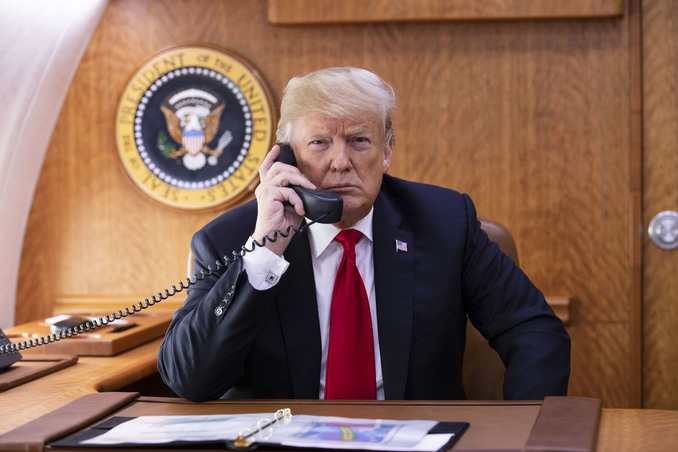
President Donald Trump urged Iran to return to negotiations. He also asked Israeli Prime Minister Benjamin Netanyahu not to retaliate after Iran launched a missile attack against Israel, according to reports from Axios.
The comments came as the Trump administration continued efforts to secure a peace agreement with Tehran. Those efforts continued despite renewed fighting in the region.
Iran fired roughly 10 to 11 ballistic missiles toward Israel on June 7. The attack marked Tehran’s first direct attack on Israel since an April ceasefire. Israeli officials said most of the missiles were intercepted or landed in open areas. However, air raid sirens sounded across parts of the country. Schools were also closed nationwide for the following day.
The missile barrage came hours after Israel struck Hezbollah targets in Beirut’s southern suburbs. The strikes followed rocket attacks launched toward northern Israel. Iranian officials had warned that Israeli military action in Lebanon could trigger a response.
Trump quickly moved to prevent further escalation. He told Axios he planned to contact Netanyahu directly.
“I am going to call Netanyahu right now and tell him not to strike back,” Trump said. “Each of them had their fun. Israel had its strike, and Iran had its strike. We don’t need another one.”
The president said negotiations with Tehran remain close to producing an agreement. He warned that additional military action could jeopardize those efforts.
“We are very close to a final deal with Iran,” Trump said. “It is going to be a good deal. I don’t want it to blow up because of what is happening now.”
Trump also urged Tehran to return its focus to diplomacy.
“What I would suggest to Iran: You’ve shot your missiles, that’s enough. Get back to the table and make a deal,” he told Fox News.
In a separate interview with the Financial Times, Trump suggested Netanyahu would ultimately have to accept any agreement negotiated between Washington and Tehran.
“He won’t have any choice,” Trump said. “I call the shots. I call all the shots. He doesn’t call the shots.”
Trump also said the missile attack would not derail negotiations.
“I think the deal is going on,” he said. “We’ll see what happens. The deal may make it on its own merit, or not. This will not have any effect on it.”
Despite Trump’s appeal for restraint, Israel carried out strikes against targets in western and central Iran early on June 8. Iranian state television reported explosions in several cities. These included Tehran, Isfahan, Tabriz, and Karaj. Iran also temporarily closed airspace around Tehran’s Imam Khomeini International Airport following the strikes.
The Israel Defense Forces confirmed it had struck Iranian military targets. Israeli Ambassador Yechiel Leiter said the operation targeted missile launch sites and other military infrastructure. He argued that no country would tolerate a ballistic missile attack on its territory.
Iran warned that additional Israeli strikes could provoke a broader military response. The Islamic Revolutionary Guard Corps described the missile barrage as a warning. It also threatened wider attacks if Israeli operations continue.
Israeli military officials also signaled that further action remains under consideration. IDF spokesman Brig. Gen. Effie Defrin called Iran’s missile attack “a grave mistake.” He said Israel would continue evaluating its response options.
The latest exchange has become the most serious challenge yet to diplomatic efforts between Washington and Tehran. However, Trump maintained that a negotiated agreement remains within reach. He said only a few issues remain unresolved.
“We’re very close,” Trump said during an interview aired on NBC’s Meet the Press. “We have a couple of points. They don’t even seem like big points.”