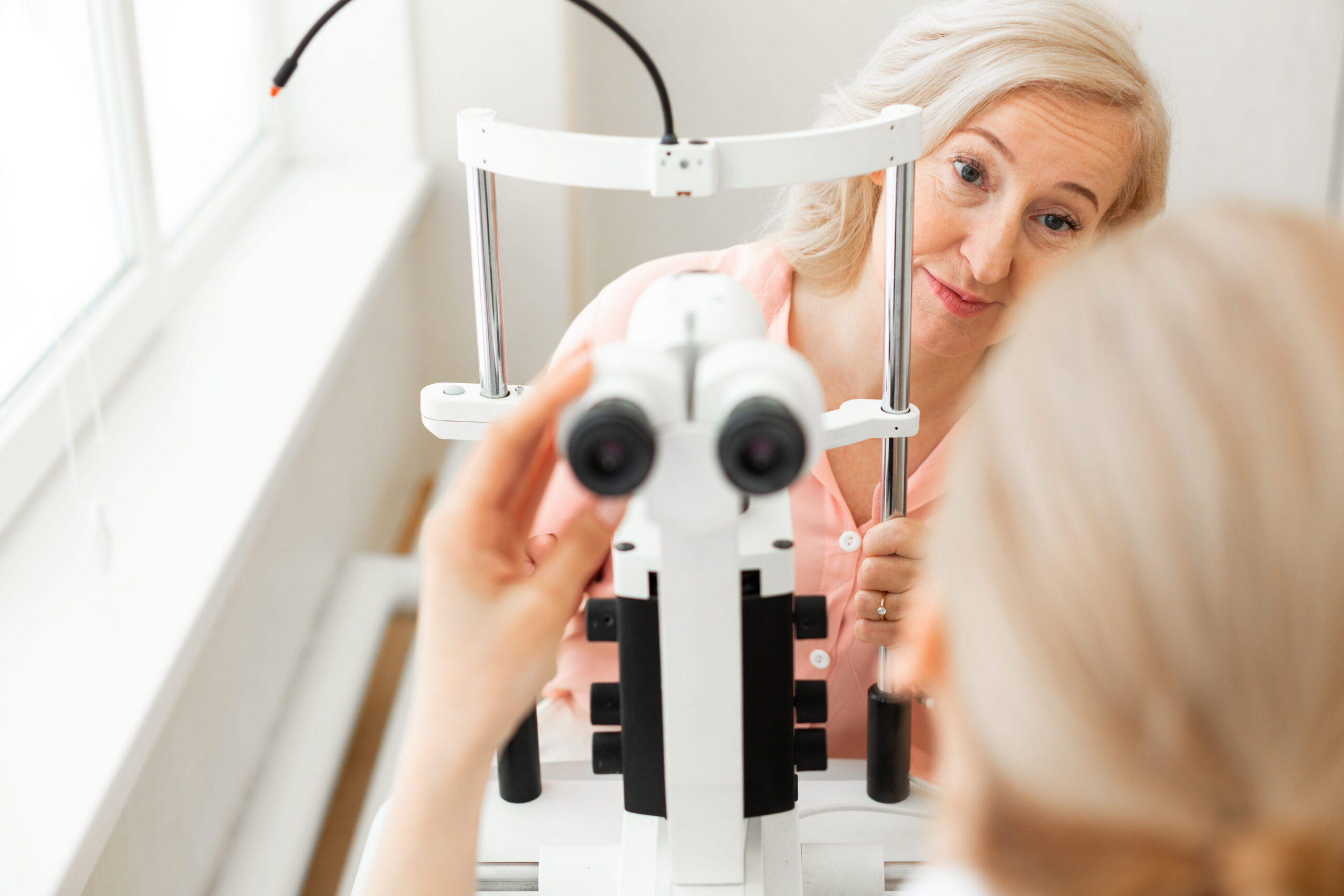
Statins, widely prescribed to lower cholesterol, may also help protect against glaucoma, a leading cause of irreversible blindness, according to new research.
The study found that adults taking statins had a 15% lower risk of developing open-angle glaucoma. Patients already diagnosed with the condition were also 60% less likely to undergo laser treatment.
The study, published in the British Journal of Ophthalmology, analyzed medical records from hundreds of thousands of adults. Researchers examined whether statin use was associated with fewer glaucoma diagnoses and a reduced need for treatment.
Glaucoma damages the optic nerve, which carries visual information from the eye to the brain. The condition can cause permanent vision loss and blindness.
More than 111 million people worldwide are expected to have glaucoma by 2040. Currently, lowering pressure inside the eye is the only proven approach to slowing the disease’s progression.
Researchers from the University of South Florida, the University of Southern California, and the University of California San Diego examined a database containing medical records from 165 million people.
The team compared 210,701 statin users with an equal number of non-users. Participants were matched based on age, sex, race, smoking history, and other health factors.
After five years, 2.3% of statin users had been diagnosed with open-angle glaucoma, compared with 2.6% of non-users.
That represents approximately three fewer diagnoses for every 1,000 people taking statins.
Researchers also examined whether statins were associated with a reduced need for more intensive glaucoma treatments.
In a separate analysis, they compared 29,598 glaucoma patients taking statins with an equal number of patients who were not taking the drugs.
After five years, statin users had a 60% lower risk of undergoing selective laser trabeculoplasty. The procedure uses laser pulses to lower pressure inside the eye.
Statin use was also associated with a 55% lower risk of minimally invasive glaucoma surgery and a 36% lower risk of traditional glaucoma surgery.
Additionally, patients taking statins had an 11% lower likelihood of receiving prescriptions for pressure-lowering eye drops.
The associations remained after 10 years, although some weakened. At that point, statin users had a 10% lower risk of developing glaucoma and a 51% lower risk of laser treatment.
Researchers also examined differences between individual statin medications.
Atorvastatin and rosuvastatin showed results consistent with the overall findings. However, simvastatin and pravastatin were not associated with a statistically significant reduction in new glaucoma diagnoses.
The researchers suggested several possible explanations for the findings. Statins may help protect the optic nerve by reducing inflammation, improving blood flow, or affecting fluid drainage within the eye.
However, the study did not directly test these mechanisms.
The authors cautioned that the findings do not establish that statins prevent glaucoma or slow its progression.
Because the research relied on medical records, investigators lacked detailed information about patients’ eye pressure measurements and the reasons behind individual treatment decisions.
As a result, fewer surgical procedures do not necessarily indicate that patients experienced less severe disease.
Previous research has also produced conflicting findings. Some studies have suggested protective effects, while others have linked long-term statin use to increased eye pressure and glaucoma risk.
“Our findings suggest that statin usage is associated with both lower incidence of primary open-angle glaucoma as well as decreased treatment escalation,” the researchers wrote.
They called for randomized clinical trials to determine whether statins directly protect against glaucoma.
Until stronger evidence becomes available, the findings do not justify starting statins specifically to prevent glaucoma. Lowering pressure inside the eye remains the established treatment approach.